STYLE
ERA
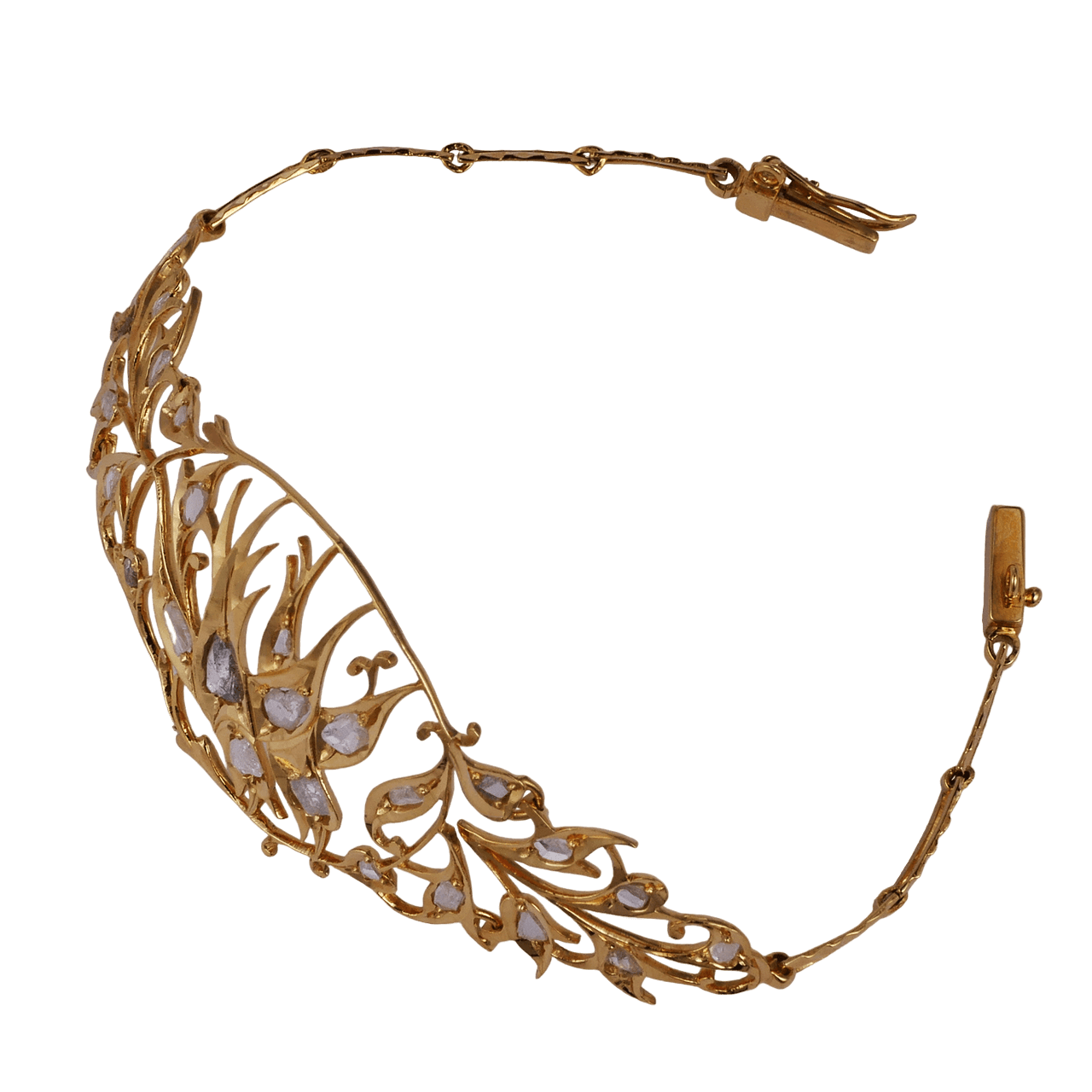
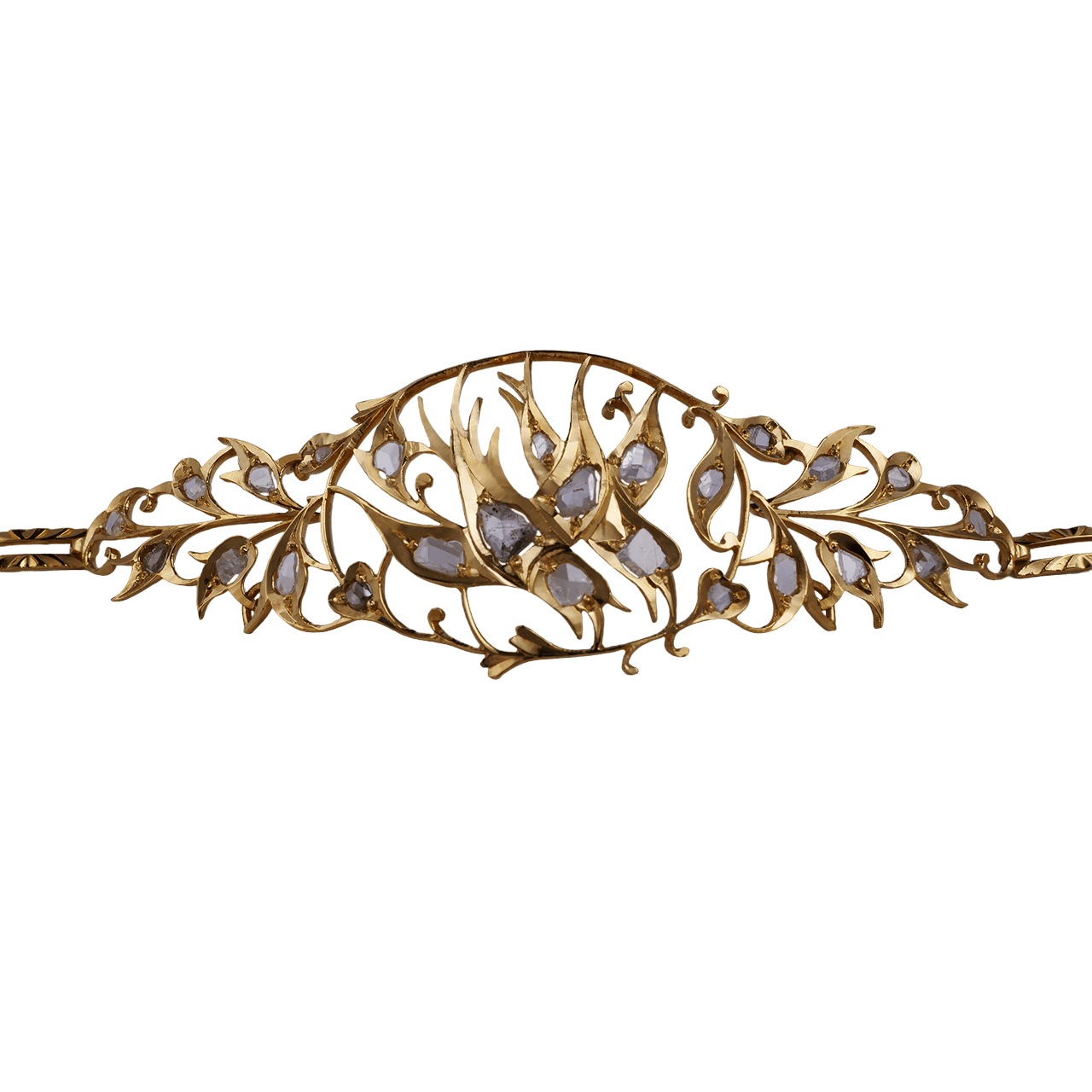
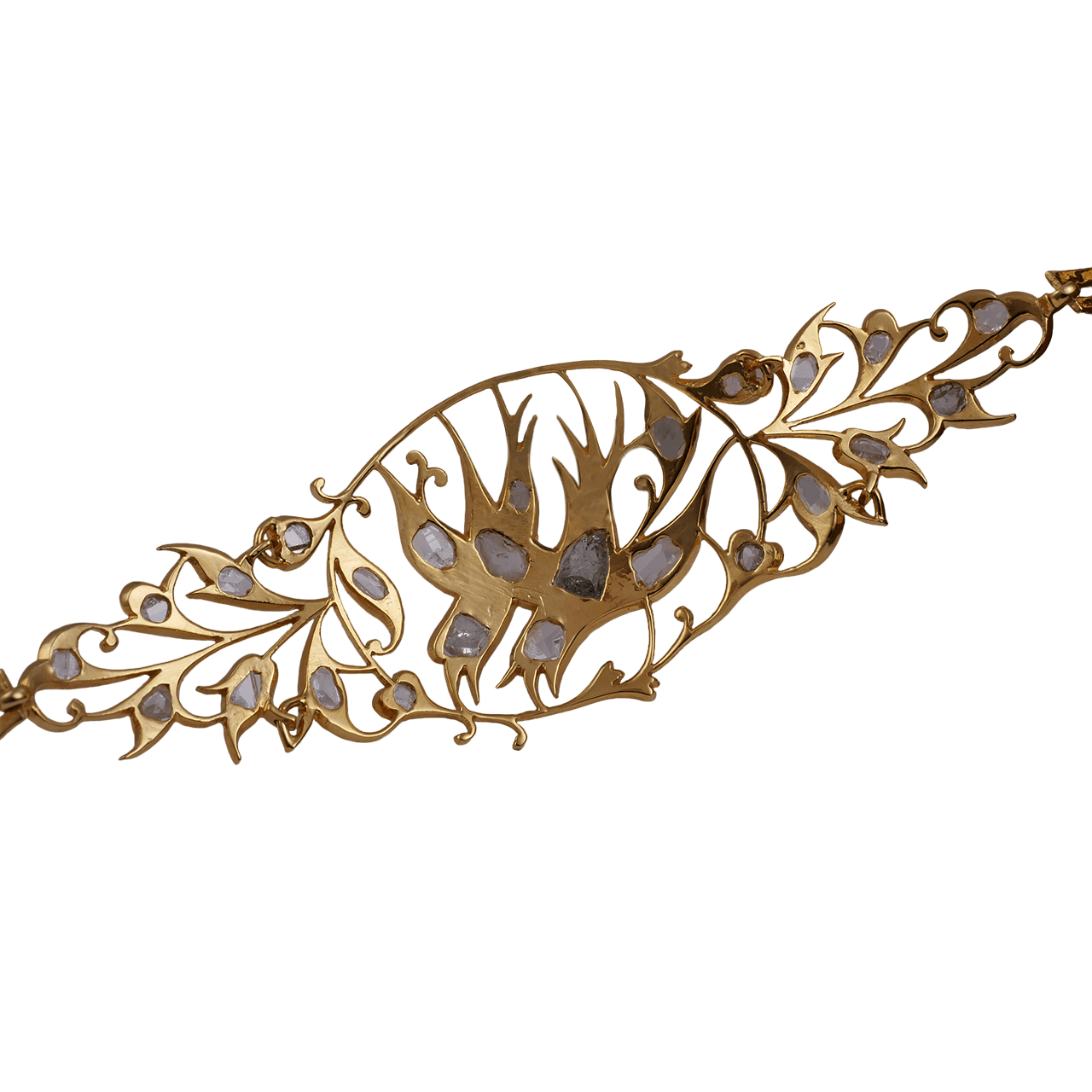
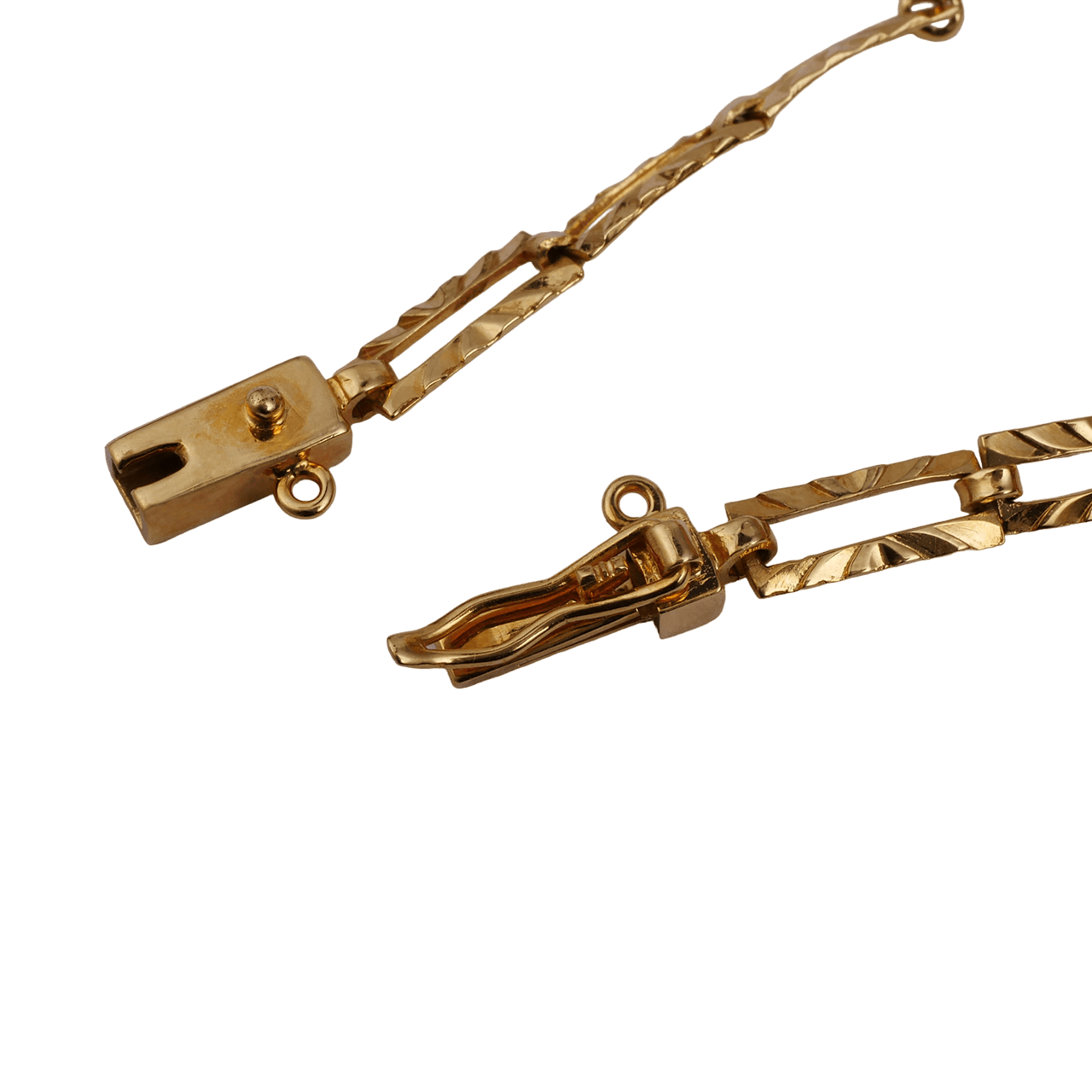
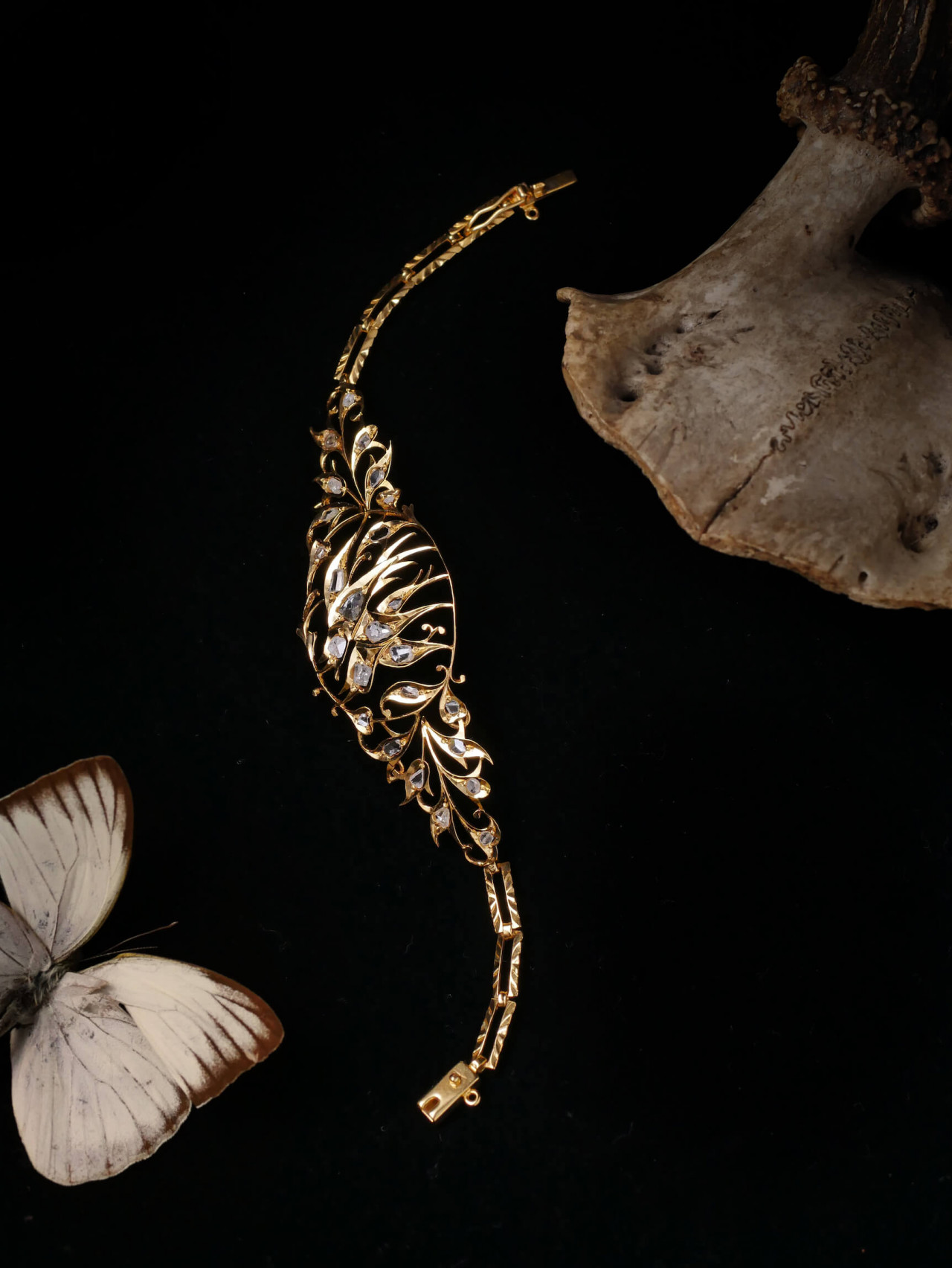
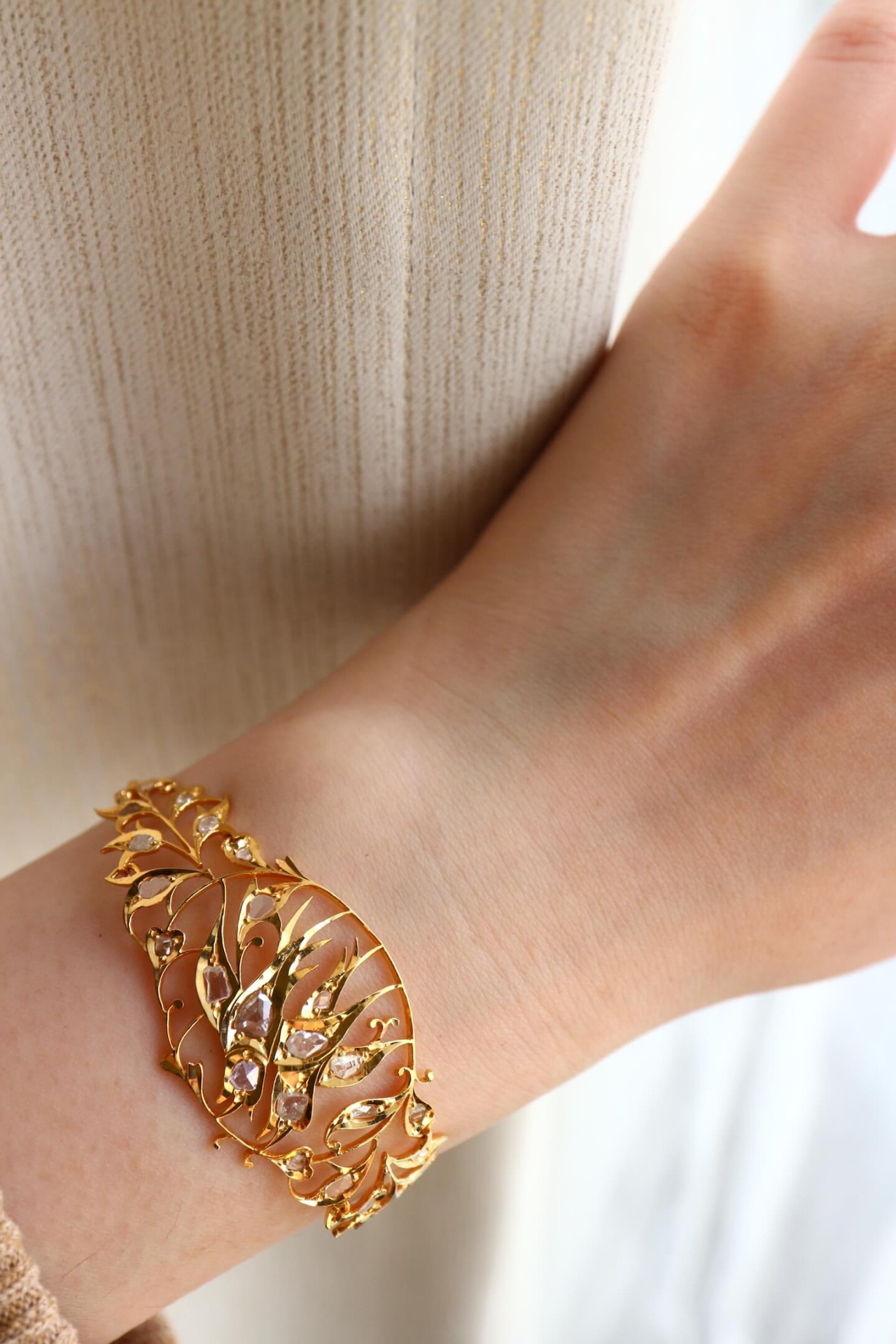
Singaporean Antique Peranakan double swallow diamond bracelet
Peranakan jewelry are renowned for their exquisite craftsmanship. This rare double swallow gold bracelet is modeled in 18-22k solid gold and set with 25 rose cut diamonds (or “intan” in their language, referring to diamond skin.)
Swallows were symbolically deeply romantic in the antique jewelry because they represent faithfulness and the desire for the safe return of loved ones, as sailors would see swallows when approaching land. On the center panel of this bracelet depicts two swallows flying toward same direction, symbolizing they are love birds bonded together. This piece is a wedding bracelet back in time, it is in amazing condition with almost no signs of wear-probably stayed in the safe box for many decades until today.
Introduction of Peranakan jewelry:
Peranakans are descendants of marriages between Chinese and local Malaysians. Within the time, they developed a unique style: a mix between Chinese, Malay, Indian, and later on, European influences. The Peranakans have their own rich customs, cuisine, architecture, design, and of course, jewelry.
Peranakan jewelry is always famous for its nature motifs such as the phoenix, dragonfly, butterfly, flowers, and leaves. These pieces are symbolic of wealth and blessings that were passed down from generation to generation.
However, it's rare to find a piece of antique Peranakan jewelry now. A large number of its owners had melted the piece down and repurposed it, during the Great Depression and two World Wars, which was extremely common throughout the time. In addition, unlike the well-preserved Western antique jewelry, Asian antique jewelry was considered dated by the locals. So they asked the gold shop to disassemble the jewels and use the diamonds to make more fashionable ones.
Therefore, if you are lucky enough to come across a piece of Peranakan jewelry, think of what it had been through in order to be around today.
Related jewelry blog: La Belle Epoque (c.1890-1914)-Heritage and Innovation, Garland Style and Art Nouveau