STYLE
ERA
Portuguese chrysoberyl and moss agate cluster brooch c.1800
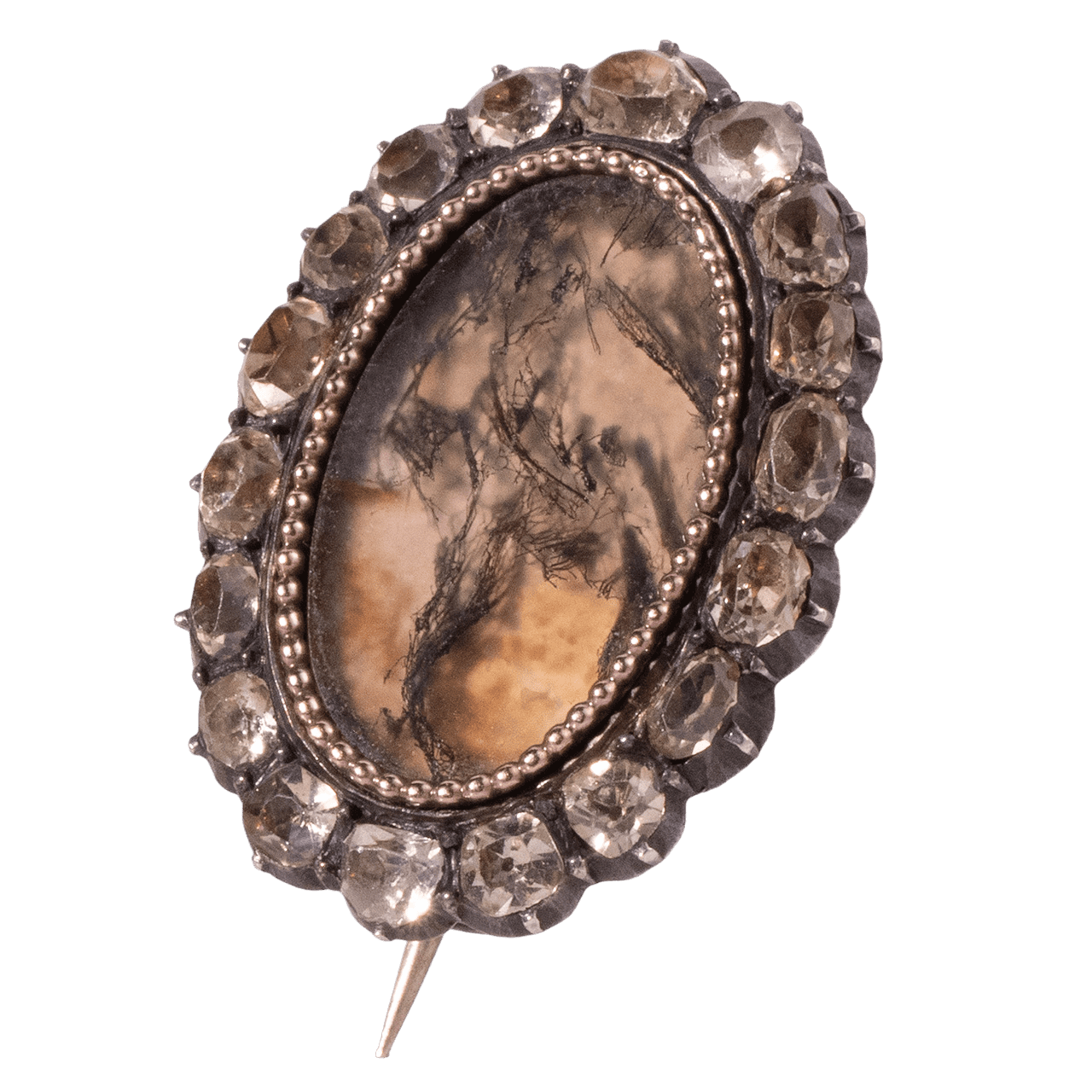
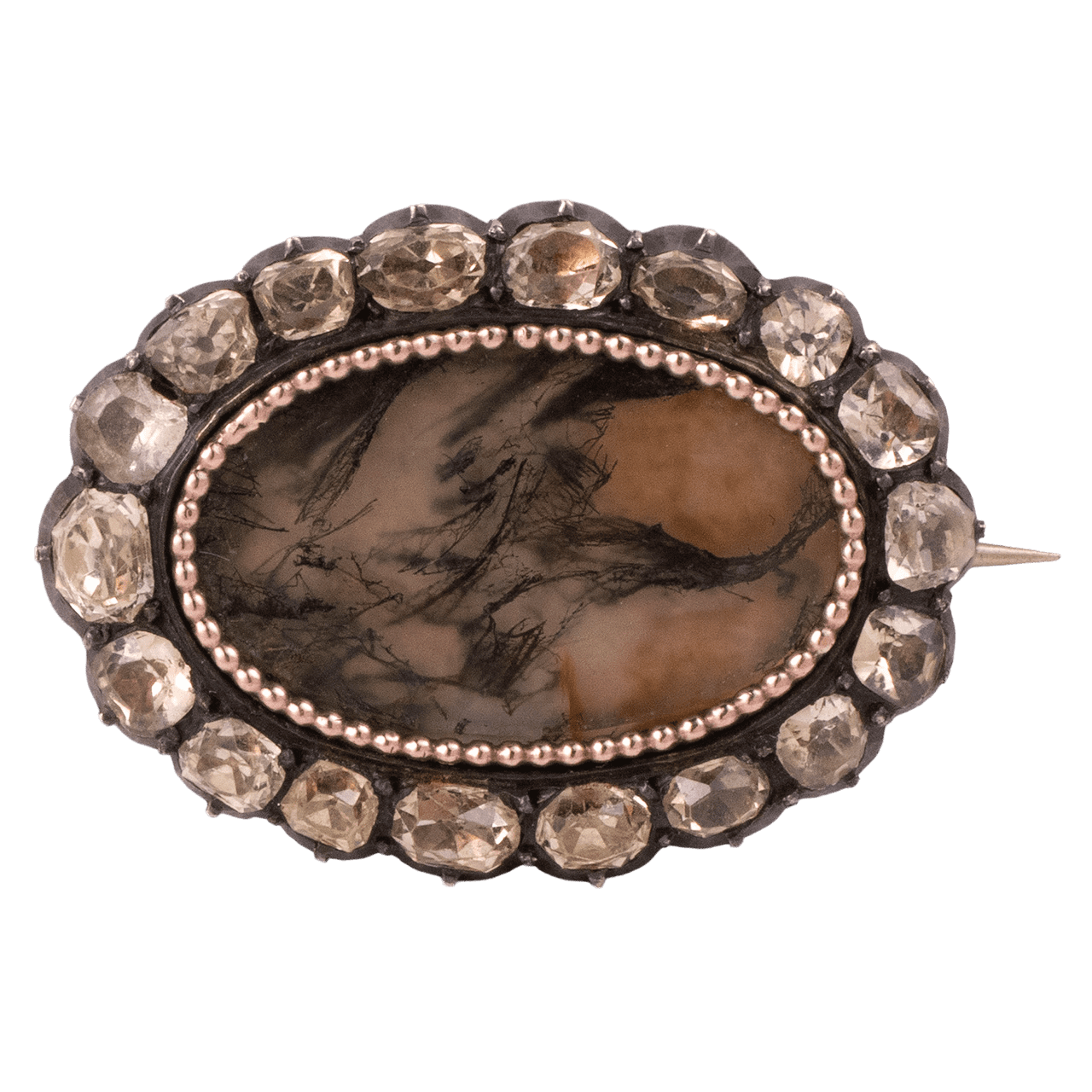
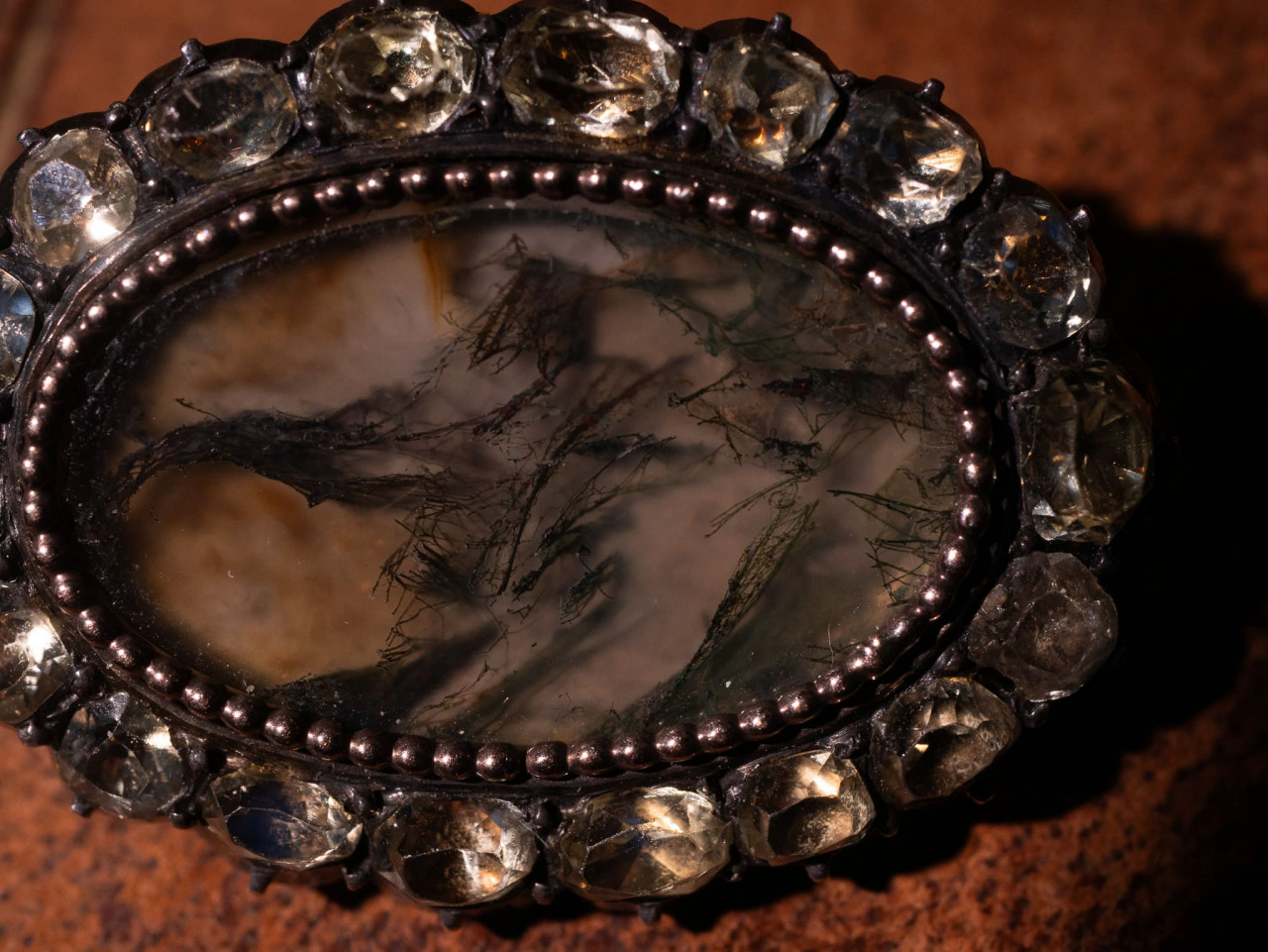
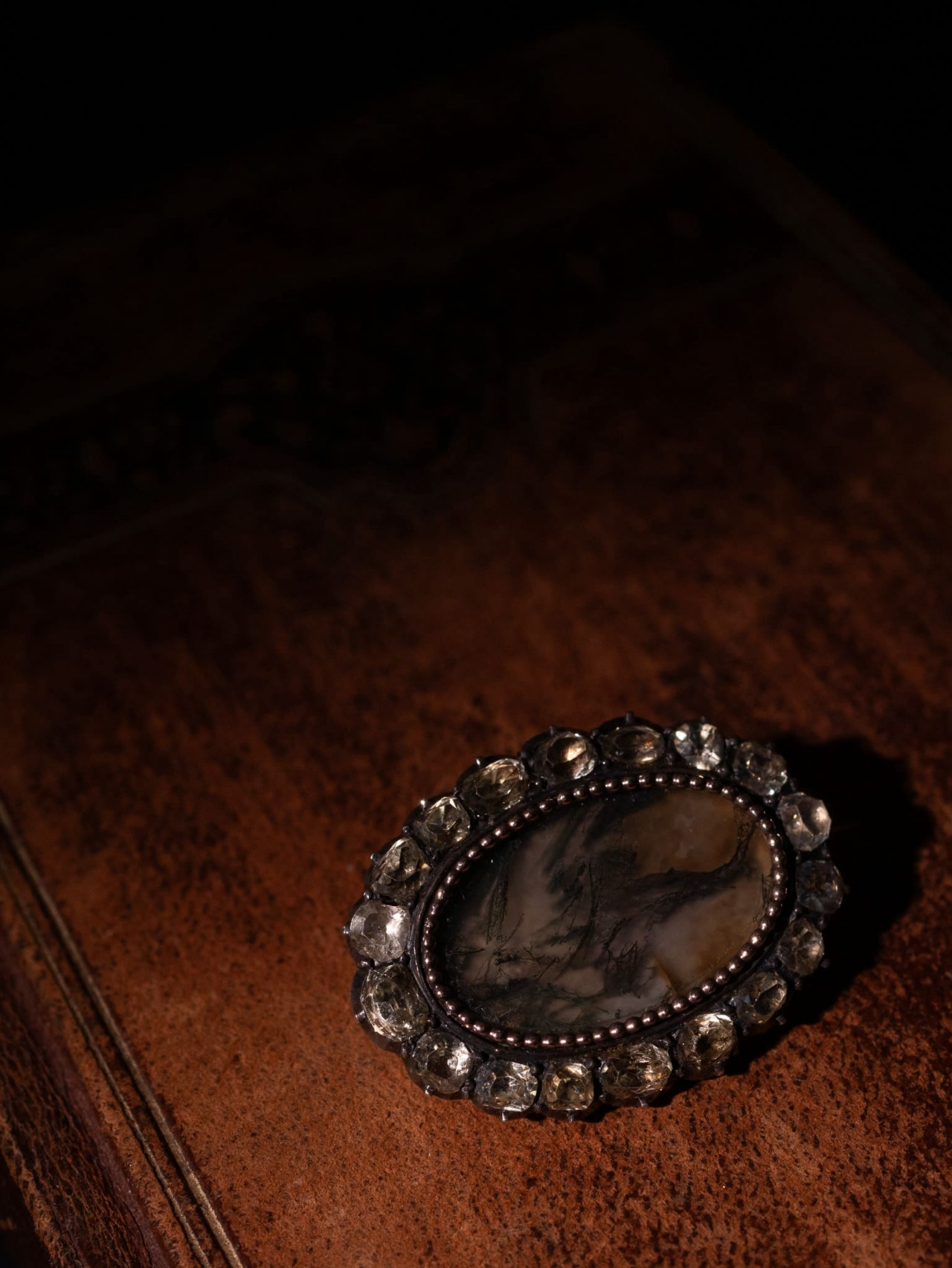
This brooch, dating back to Portugal from the beginning of 19th century, is crafted from gold and silver, set with moss agate and chrysoberyl.
The brooch is adorned with a hand-cut chrysoberyl halo. Of all the mineral species, chrysoberyl has the most notable phenomenal varieties due to its unique optical characteristics, known as phenomena. Portuguese jewelry enthusiasts often hear the term "crisólita" used to describe gemstones in 18th- to 19th-century jewelry that resemble chrysoberyl. In reality, "crisólita" is a very popular trade name in the Portuguese antique market, originally a late 18th-century misnomer referring to greenish-yellow chrysoberyl. The name of this mineral comes from the Greek words "chrysos" (gold) and "berullos" (transparency). In Portugal and Brazil, it is also known as "oriental chrysolite." This gemstone became particularly popular in the late 18th century and early 19th century, thanks to the discovery of significant quantities of high-quality gem material in the Minas Novas mining district of Brazil.
Nestled within the chrysoberyl cluster is a moss agate that resembles a moody ink painting, with filamentous patterns meandering through its translucent, earth-toned body, creating a rich, three-dimensional effect that is captivating from every angle.
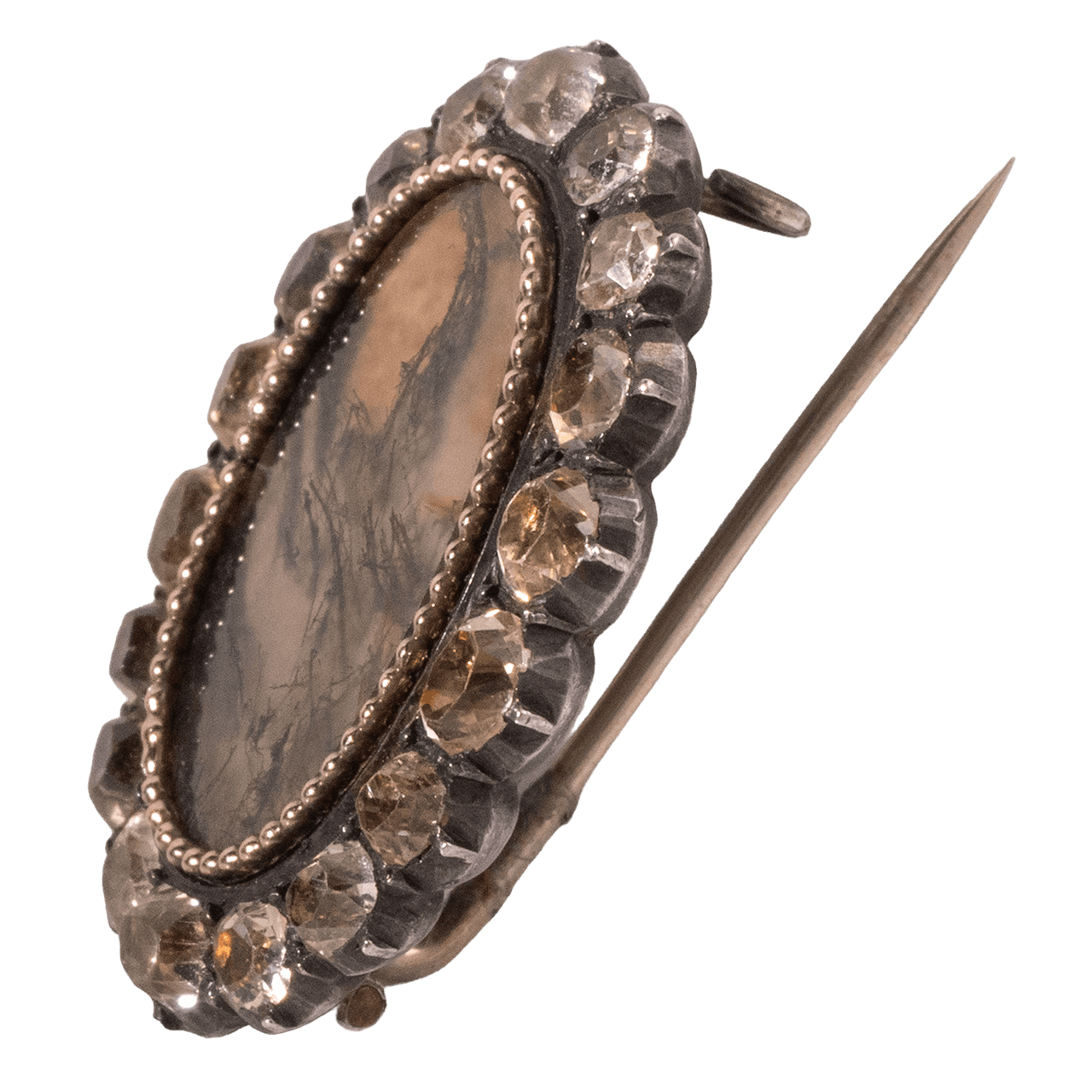
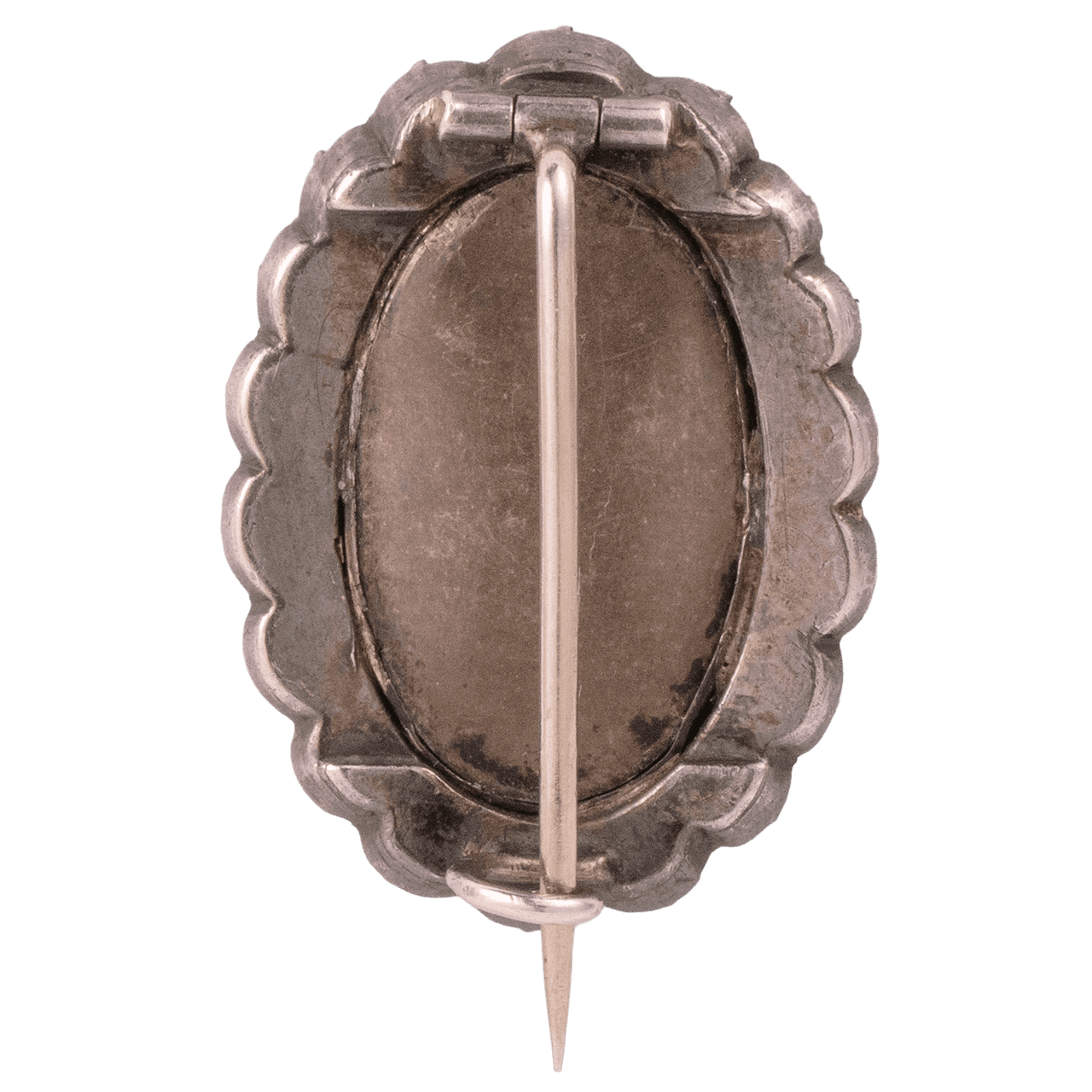
The piece features bezel settings and a closed-back design, characteristic of jewelry from this period, exuding a strong handmade feel and rustic charm. The inner gold bead frame detailing adds a touch of variation, while the simple design highlights the beauty of the gemstones themselves.
The brooch is in good antique condition, with normal oxidation and signs of wear. Since the assessment of condition is highly subjective, please click and enlarge our photos to view more detailed condition as a basis for your judgment.