STYLE
ERA
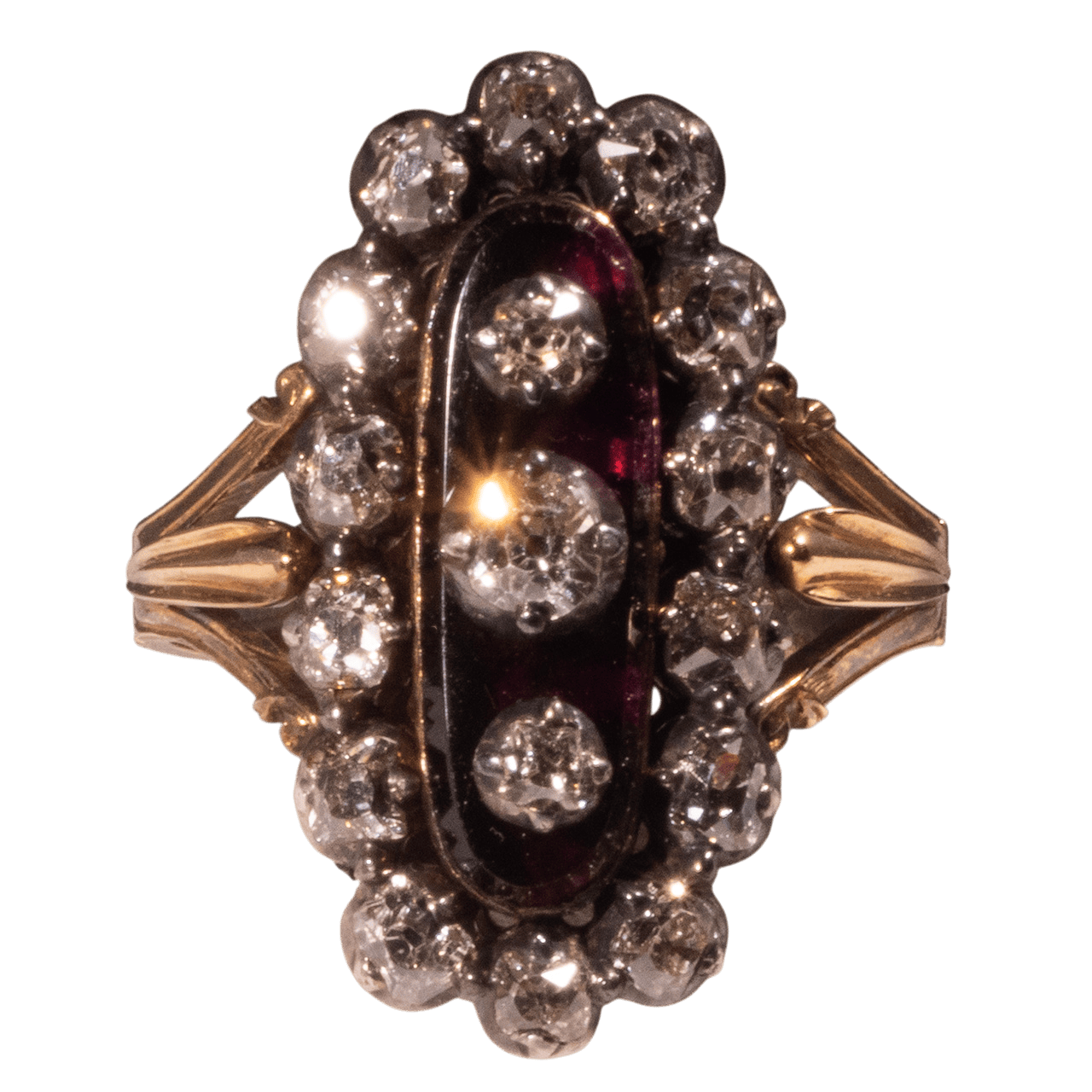
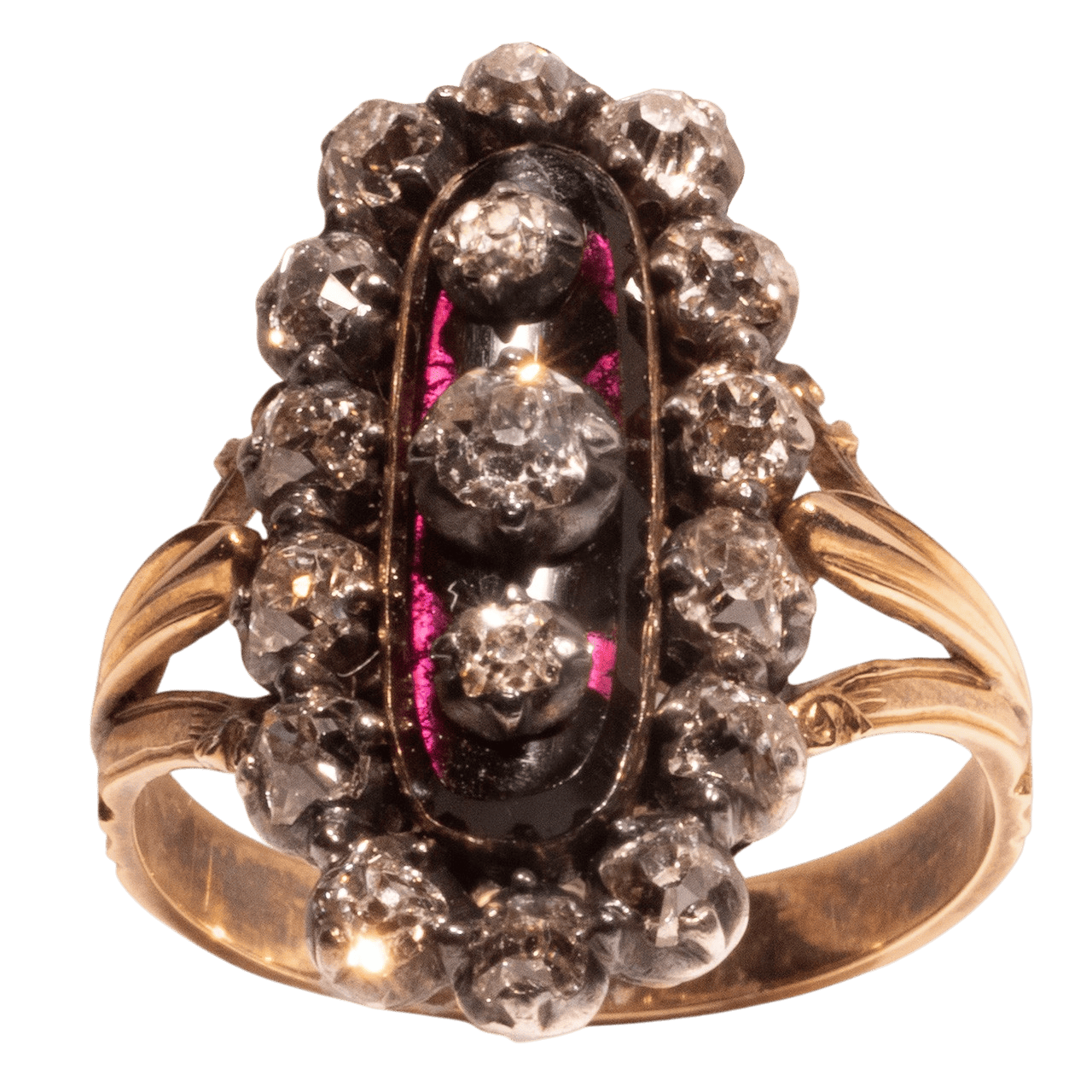
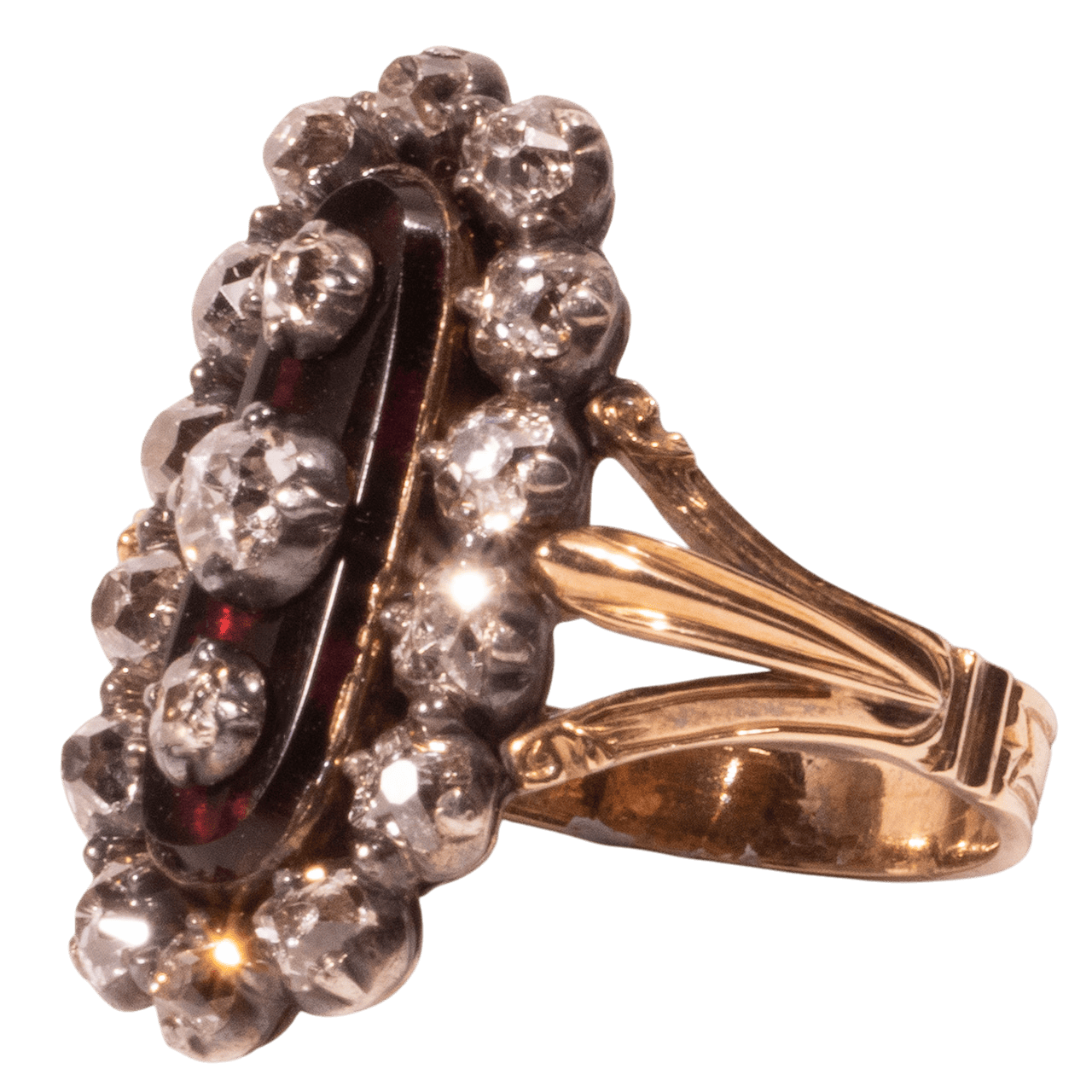
(RESERVED)French aubergine glass “bague au firmament” diamond ring in 18k gold, c.1800
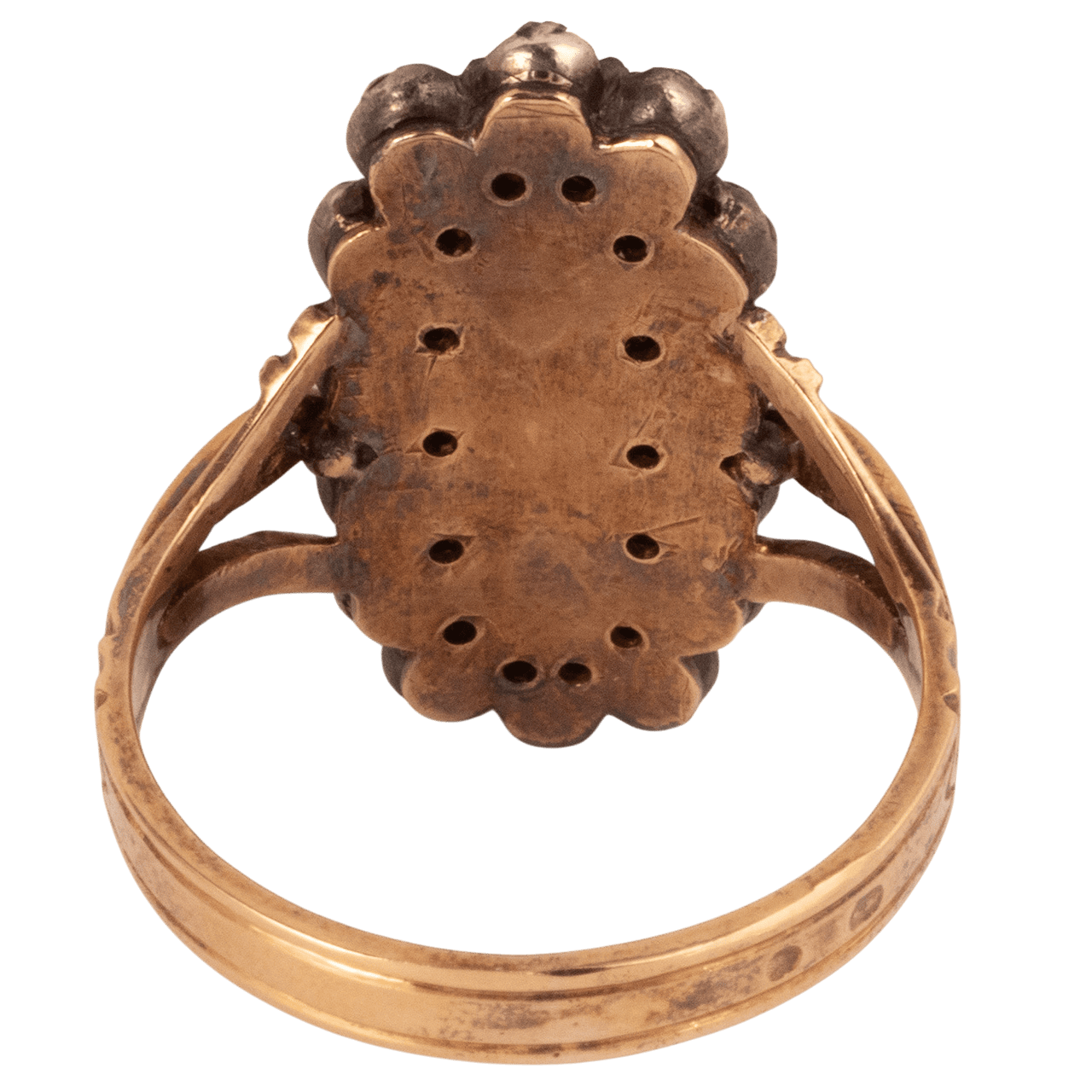
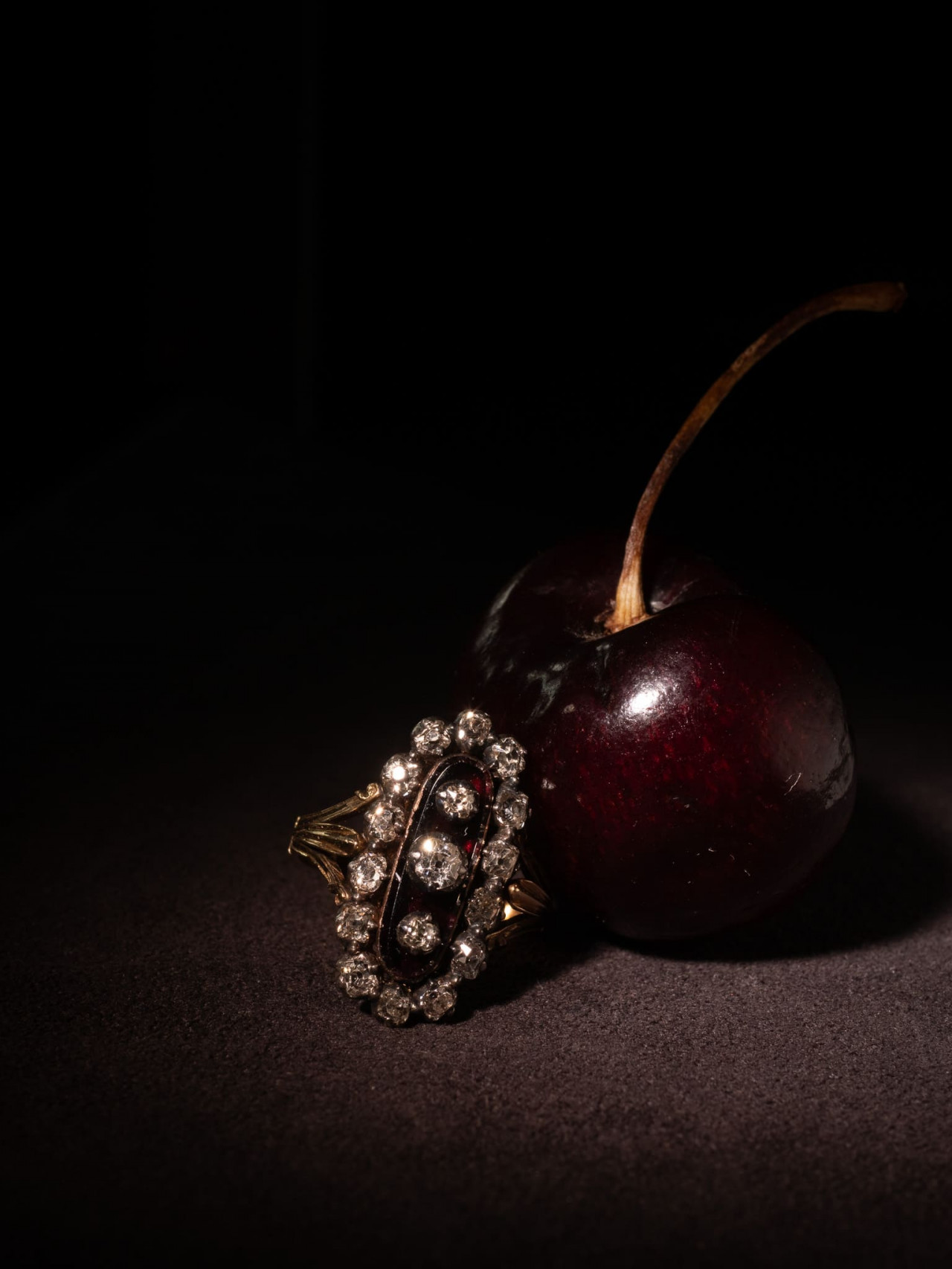
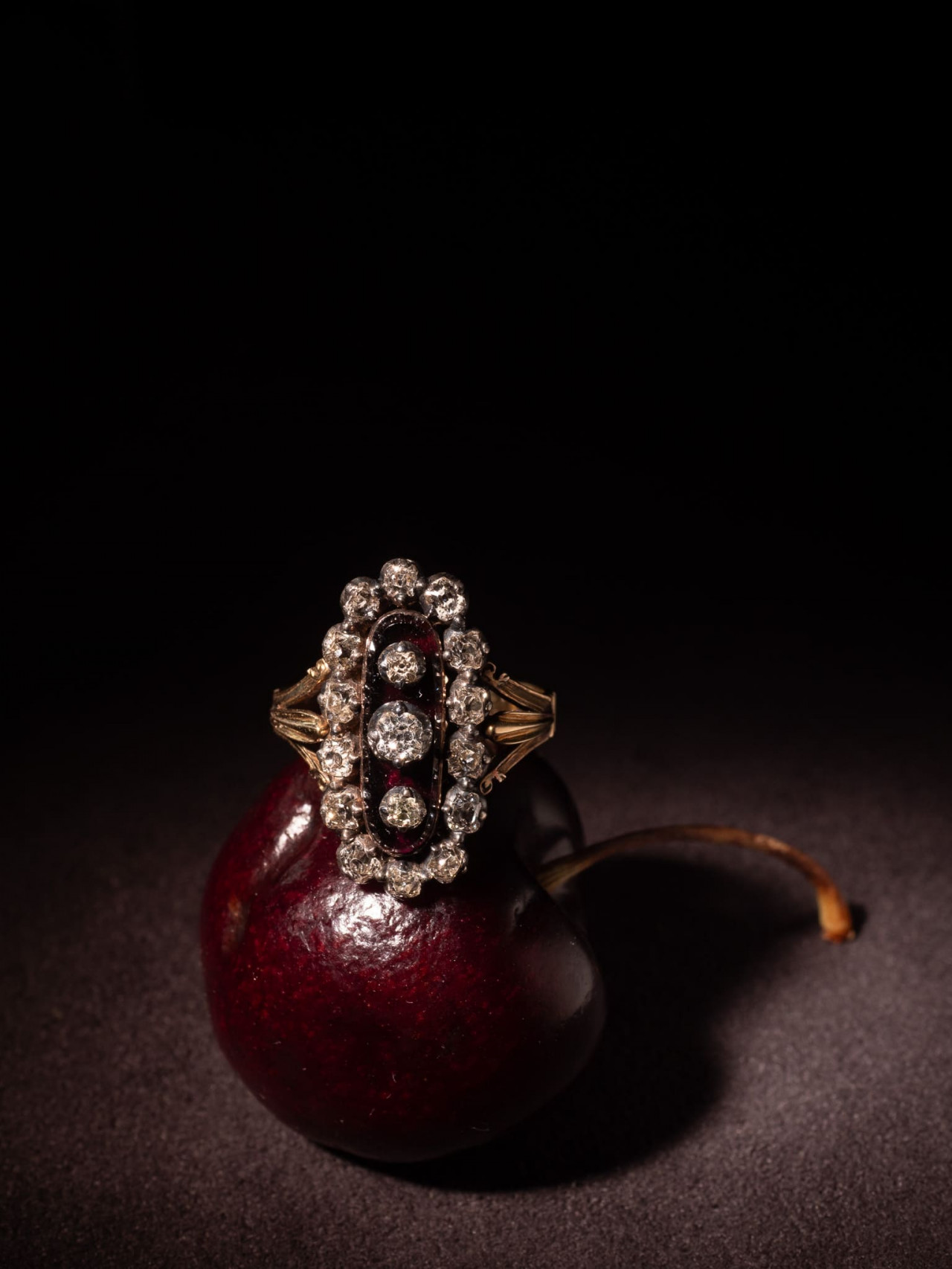
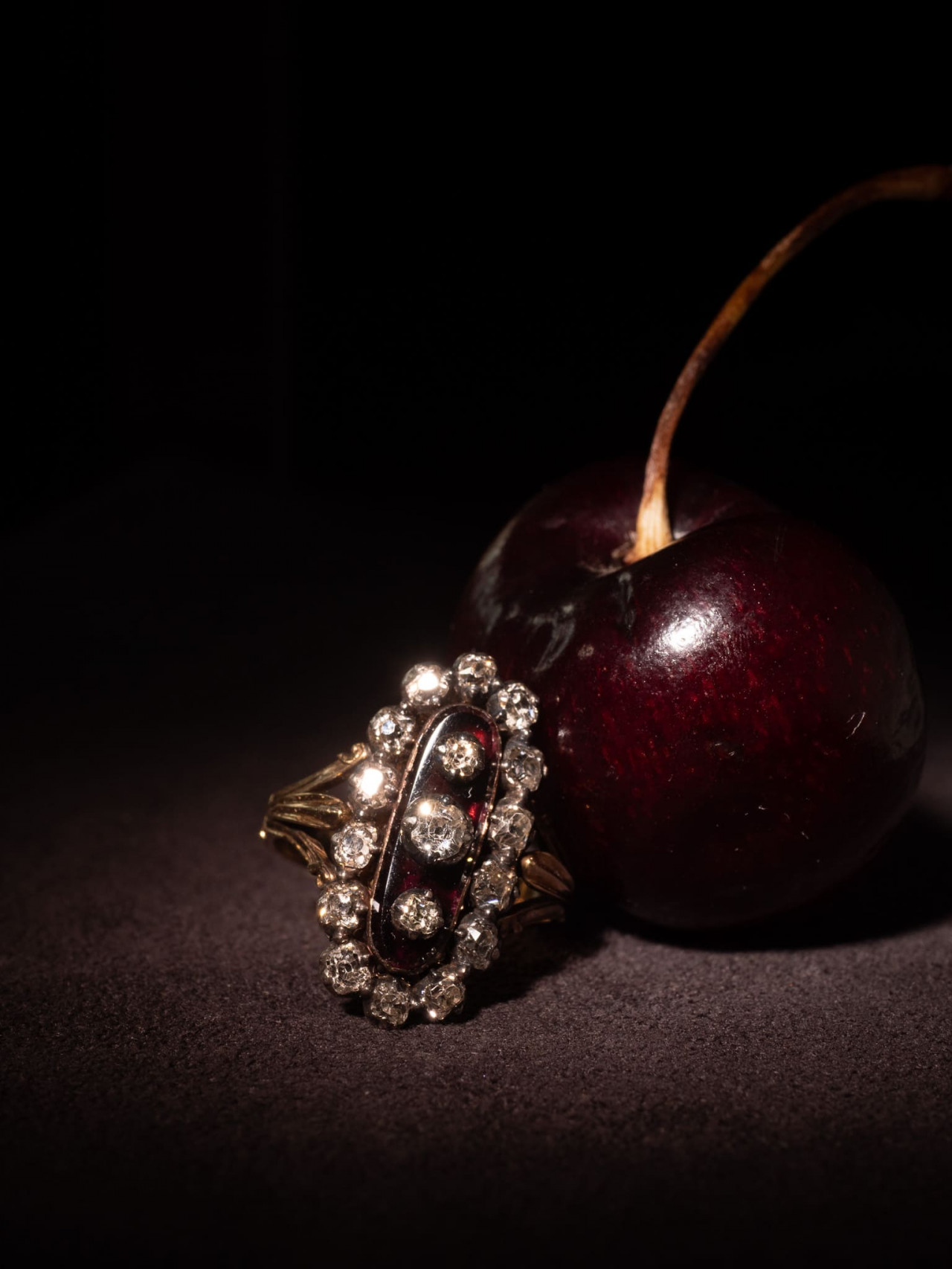
This French bague au firmament ring from the 1800s is crafted in 18k solid gold and set with old-cut diamonds on a rare deep aubergine glass background.
The firmament ring, inspired by the celebrated jewels of Queen Marie-Antoinette, was designed to capture the night sky within a jewel. Its lozenge pattern represents stars scattered across the heavens — a symbol that the wearer held the firmament in hand, embodying power, elegance, and celestial grace.
While most firmament jewels feature midnight blue glass and a few employ dark green, this ring stands out with its exceedingly rare aubergine tone — the term deriving from the French word for eggplant.
The rarity of purple glass lies not only in its scarcity but also in the difficulty of achieving its color. In the late 18th century, such hues were produced using either manganese dioxide or the gold-based pigment Purple of Cassius, a substance already famous in 17th-century German art as a rich purple-red enamel. By the mid-19th century, physicist Michael Faraday demonstrated that this pigment’s distinctive hue arises from colloidal gold — infinitesimally small particles of metallic gold suspended in a tin oxide matrix.
Producing this colorant was not only technically demanding but also hazardous and costly. Creating Purple of Cassius required aqua regia, a corrosive acid mixture capable of dissolving gold and releasing toxic fumes. Without modern ventilation, this process was dangerous for artisans. Moreover, the success of the pigment depended on an exact chemical balance: the gold ions had to be reduced and evenly dispersed as nano-sized particles. Any deviation could destroy the color. These precarious conditions and the high cost of materials meant that aubergine glass jewels could only emerge from the finest workshops.
Not all purples were made from gold, yet before the rise of modern chemistry, most purple pigments came from rare natural sources — marine mollusks or low-yield plant dyes — both costly, unstable, and difficult to fix. Across history, this scarcity intertwined purple with royalty and power, east and west alike.
In jewelry-making, aubergine glass posed additional challenges during firing and foiling. Even slight temperature variations could shift the tone from deep violet to dull brown or grey. The glass was typically backed with silver or metal foil to enhance brilliance; however, with purple glass, this interaction at high temperature often risked discoloration or dullness. By contrast, cobalt oxide blues remained chemically stable through firing and foiling, explaining why the classic firmament blue dominates among surviving examples. Green, colored with copper or iron compounds, was also uncommon but far easier to achieve than purple.
Purple, then, is the rarest sky — born of dangerous chemistry and extravagant ambition. It represents not only the mastery of 18th–19th century artisans but also the enduring association between the color violet, luxury, and transcendence.
The ring is in good antique condition, showing normal oxidation and wear. The glass remains intact with no apparent surface losses. We encourage you to view the enlarged photos for a closer look at the condition.
Come have a look of Queen Marie Antoinette’s fashion: Marie Antoinette-Controversial Queen of France & Undisputed Queen of Fashion